
Views: 0 Author: Site Editor Publish Time: 2025-12-26 Origin: Site

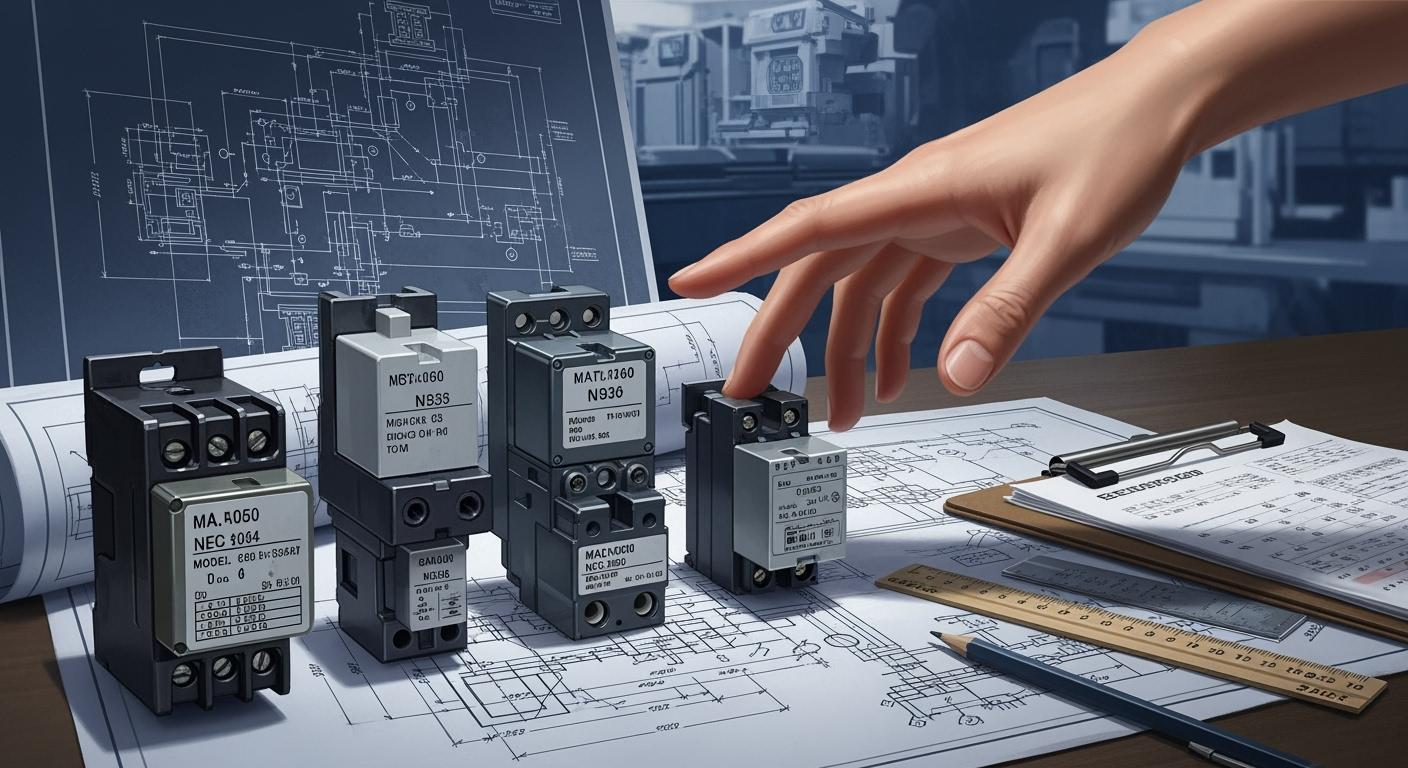
Selecting the right industrial relay requires careful attention to technical details. Engineers must consider voltage, current, load type, and the operating environment when choosing key components of a relay for industrial machinery. The table below outlines important specifications for machine control relays:
Specification Type | Description |
Input and Output Parameters | Voltage and current ratings for both input control signal and output load are essential for compatibility. |
Contact Ratings | Maximum load the relay can handle, including current and voltage ratings for resistive and inductive loads. |
Coil Characteristics | Parameters such as coil voltage and resistance, which dictate the control signal needed for activation. |
Mounting Options | Options include PCB, panel, and socket mounts, important for installation and integration. |
NCR’s Magnetic Latching Relay demonstrates how relays work in common applications of relays, such as smart metering and energy management. Understanding the types of relays and how to test a relay leads to better control and reliable testing in industrial environments.
· Selecting the right industrial relay is crucial for system reliability and safety. Always match relay specifications to application demands to prevent failures.
· Consider the load type when choosing a relay. Different loads, like resistive or inductive, require specific relay features for safe operation.
· Evaluate environmental factors such as temperature and humidity. Choose relays designed for harsh conditions to ensure long-term performance.
· Use the provided checklist to guide your relay selection process. This helps avoid common mistakes and improves overall system efficiency.
· Consult with trusted suppliers for expert advice. Their insights can help you choose the best relay for your specific industrial application.
Selecting the correct industrial relay plays a key role in the success of any control system. Engineers and technicians rely on relays to manage power, protect equipment, and ensure safe operation in many industrial environments. A poor choice can lead to equipment failure, downtime, or even safety hazards.
Tip: Always match the relay’s specifications to the demands of the application. This step prevents overloads and extends the life of the system.
The industrial relay selection guide helps users avoid common mistakes. It provides a clear process for evaluating voltage, current, and load type. These factors affect how well the relay performs in real-world conditions. For example, a relay used in automation must handle frequent switching and resist wear over time.
Here are some reasons why choosing the right relay matters:
· System Reliability: The right relay ensures stable operation. It reduces the risk of unexpected shutdowns.
· Safety: Proper relay selection protects both people and machines from electrical faults.
· Efficiency: A well-matched relay improves energy use. It supports efficient automation and reduces waste.
· Cost Savings: The correct relay lowers maintenance costs. It prevents damage to expensive equipment.
In industrial settings, relays must meet strict standards. They often operate in harsh environments with high temperatures, vibration, or dust. A relay designed for one application may not work well in another. For instance, a relay for motor control needs different features than one for smart metering.
The industrial relay selection guide gives step-by-step advice. It helps users compare options and choose the best fit for their needs. Careful selection leads to better performance and longer service life for all automation projects.
An industrial relay acts as an electrically operated switch. It uses a small electrical signal to open or close a circuit. This process allows a low-power control signal to manage a much larger electrical load. In many systems, a relay separates sensitive electronics from high-power circuits. This separation protects devices from damage and reduces the risk of failure.
Industrial relays perform several important roles in electrical control systems:
· They control high-power circuits using low-power signals.
· They protect sensitive electronics from overload or damage.
· They reduce the risk of failure in electrical systems.
· A small control signal from a programmable logic controller (PLC) can activate a relay.
· The relay then operates heavy machinery without direct electrical connections.
· Relays allow circuits to be switched by electrical equipment.
· They act as switches controlled by low-power signals.
· They enable precise control over device operation, such as in timer circuits.
· They manage high-power devices safely and efficiently.
· Relays are used in home automation systems.
· They are essential in industrial applications for controlling motors and lights.
Note: Industrial relays help engineers design safe and efficient systems for many applications, from factories to smart homes.
Industrial relays differ from general-purpose relays in several ways. The table below highlights the main differences:
Feature | Industrial Relays | General-Purpose Relays |
Power Handling Capability | High current and voltage handling | Limited current and voltage capacity |
Size | Generally larger for heavy-duty use | Compact and suitable for lower power |
Durability | Built for heavy-duty operations | Suitable for low- to medium-power tasks |
Lifespan | Extended lifespan due to robust design | Shorter lifespan compared to industrial |
Cost | Higher cost due to robust construction | More cost-effective for various tasks |
Industrial relays are designed for demanding environments. They last longer and handle more power than general-purpose relays. General-purpose relays work well for simple, low-power tasks. Industrial relays support heavy machinery and critical systems where reliability matters most.
Electromechanical relays use a physical moving armature to open or close contacts. These relays are popular in many industrial settings because they handle high voltages and currents. Many engineers choose them for their simplicity and reliability. In factory automation, electromechanical relays often control large machines and equipment. They also appear in older systems to implement logic functions.
Note: Electromechanical relays can switch both AC and DC loads, making them versatile for different applications.
Solid state relays use semiconductor devices instead of moving parts. This design allows for faster switching speeds and a longer lifespan. Solid state relays work well in environments where frequent switching is needed, such as HVAC systems and food processing machinery. They control heating elements, motors, and conveyor belts. Because they have no moving parts, they produce less noise and require less maintenance.
Relay Type | Typical Applications |
Electromechanical Relays | High-power equipment, logic functions in older systems |
Solid State Relays | HVAC, food processing, factory automation |
Latching relays maintain their position after being actuated, even when the control signal is removed. This feature saves energy and increases efficiency. NCR’s Magnetic Latching Relay is a prime example, offering reliable performance for smart metering, energy management, and electric vehicle charging. Latching relays are ideal for applications that need to remember their last state during power interruptions.
Time delay relays introduce a set delay before switching contacts. These relays help sequence operations or prevent short cycling in industrial processes. Engineers use them in conveyor systems, lighting controls, and motor start circuits. Time delay relays ensure that equipment operates in the correct order and at the right time.
Automotive and power relays are designed for vehicles and high-power applications. They handle large currents and protect circuits in cars, trucks, and industrial power systems. These relays support functions like starter motors, lighting, and battery management. Their robust construction ensures reliable operation in harsh environments.
The relay selection guide helps users match the right relay to each application. Understanding the main types of relays makes the relay selection guide more effective for any industrial project.
Engineers must identify the type of load the relay will switch. Resistive loads, such as heaters or incandescent lamps, draw steady current. Inductive loads, like motors or transformers, create high inrush currents and voltage spikes. Capacitive loads, such as certain lighting systems, can cause brief but intense current surges. Each load type requires specific relay features for safe and efficient operation.
Overload relays serve as a critical safety measure to safeguard electrical systems and equipment. They prevent the motor or device from drawing excessive current for an extended period, which can lead to overheating and, ultimately, system failure.
The contact rating tells users the maximum current and voltage the relay can handle. Switching capacity shows how much current the relay can interrupt without damage. In high-power applications, the contact rating is essential as it defines the maximum current and voltage a relay can safely manage. The switching capacity is equally important as it reflects the relay's capability to interrupt current without sustaining damage, particularly when dealing with inductive or capacitive loads. Selecting relays with ratings that surpass the anticipated load is crucial for ensuring reliability and avoiding failures caused by inrush currents or persistent arcs.
The coil voltage must match the available control signal. Using the correct voltage ensures reliable operation and prevents coil damage. The table below shows typical voltage input ranges for common industrial relays:
Relay Type | Voltage Input Range |
RV8H Series Electromechanical Relays | 5VDC to 240VAC |
6mm Electromechanical Relays | 5VDC to 240VAC |
The choice between AC and DC relays depends on the application and environment.
· AC relays are preferred for high-power AC loads, such as HVAC systems.
· DC relays are more suitable for low-power or battery-operated systems.
· The operating environment affects relay choice; AC relays can handle inductive reactance, while DC relays are less prone to arcing in high-voltage applications.
· The complexity of the control system and ease of integration with existing components also influence the selection.
Relays come in different configurations, such as Single Pole Single Throw (SPST), Single Pole Double Throw (SPDT), and Double Pole Double Throw (DPDT). The number of poles and throws determines how many circuits the relay can switch and how flexible the control system will be. Choosing the right configuration ensures the relay meets the needs of the application.
Electrical life measures how many times a relay can switch under load before failure. Mechanical life counts the total number of operations without load. For industrial relay selection, both values matter. Applications with frequent switching or high loads require relays with long electrical and mechanical life to ensure reliability and reduce maintenance.
Temperature and humidity play a major role in the performance of any industrial relay. High temperatures can cause thermal expansion, which may lead to mechanical failure. Humidity can increase electrical resistance and cause poor contact connections. Dust and moisture often collect inside enclosures, making it harder for the relay to operate reliably. Engineers should always check the manufacturer’s specifications for recommended operating ranges. Relays designed for harsh environments often include protective coatings or sealed housings.
Tip: Select relays with wide temperature and humidity ratings for installations in factories, outdoor control panels, or areas with fluctuating climate conditions.
Industrial environments often expose equipment to vibration and shock. Machines, conveyors, and heavy vehicles can create constant movement. Relays must withstand these forces without losing performance. Manufacturers test relays for vibration and shock resistance to ensure they remain stable during operation. Engineers should look for products with certifications or ratings that guarantee durability in tough settings.
Mounting options affect installation speed and maintenance. PCB mounting allows direct soldering onto circuit boards, saving space and providing a secure connection. Socket mounting offers easier replacement and quick servicing. The choice depends on the application and how often the relay needs to be changed. For example, socket-mounted relays work well in control cabinets where technicians may need to swap units quickly.
Mounting Type | Advantages | Typical Use Cases |
PCB Mounting | Compact, secure fit | Small devices, automation |
Socket Mounting | Easy replacement | Control panels, machinery |
Space inside industrial equipment is often limited. Engineers must select relays that fit within the available area. Smaller relays suit compact control systems, while larger units handle higher currents. Always measure the installation space before choosing a relay. Manufacturers provide detailed dimensions to help with planning. Proper sizing prevents overcrowding and ensures safe operation.
Note: Choosing the right relay size and mounting method improves reliability and simplifies future maintenance.
Industrial automation systems rely on relays to perform complex control operations. Relays allow engineers to implement logic functions without advanced electronic components. They help manage high-power equipment using low-power signals. In older automation systems, relays enable precise control when digital logic is not available.
· Motor control
· Heating and cooling systems
· Lighting control
· Power distribution panels
Electromechanical relays work best for high-power tasks. Solid-state relays suit high-speed operations and frequent switching. Reed relays provide accuracy for low-level signals in clean environments.
Relays play a vital role in automation by enabling safe and efficient operation of machines and processes.
Motor control and power switching require relays with specific features. Engineers must consider input and output parameters, contact ratings, coil characteristics, and environmental factors. The table below highlights important relay features for these applications:
Feature | Description |
Input and Output Parameters | Voltage and current ratings for control signal and output load. |
Contact Ratings and Switching Capacity | Maximum load handling for safe operation under electrical current and voltage levels. |
Coil Characteristics and Power Requirements | Control signal needed for activation and impact on system power consumption. |
Environmental Considerations and Certifications | Performance under challenging conditions, including temperature, humidity, and safety certifications. |
Enhanced Safety Measures | Arc fault detection and overcurrent safeguards for reliability and compliance. |
Relays in motor control systems protect equipment and ensure safe operation. Engineers select relays with high switching capacity and robust safety features.
Automotive and transportation equipment use relays to manage circuits for starter motors, lighting, and battery systems. These relays must withstand vibration, shock, and temperature changes. Engineers choose relays with durable construction and reliable performance. Automotive relays support safe and efficient operation in vehicles and transport machinery.
Smart meters and IoT devices need relays that offer energy efficiency and precise control. Magnetic latching relays, such as those from NCR, maintain their state without continuous power. This feature saves energy and supports reliable operation in smart metering and connected devices. Engineers use these relays to improve energy management and system efficiency.
Building and energy management systems depend on relays for lighting, HVAC, and power distribution. Relays help automate processes and reduce energy waste. Engineers select relays with wide operating ranges and robust design for both indoor and outdoor installations. These relays support efficient building management and long-term reliability.
Electromechanical relays use moving parts to open and close circuits. This design makes them slower than solid state relays. Solid state relays switch much faster because they have no moving parts. In many industrial applications, engineers choose solid state relays for tasks that need quick response times. The table below shows how these two types compare:
Feature | Electromechanical Relays (Mechanical) | Solid-State Relays (SSR) |
Cycle Longevity | Up to 20,000 ON-OFF cycles | Theoretically unlimited |
Current Handling | Handles large continuous currents | Manages large currents |
Switching Speed | Slower due to mechanical movement | Faster due to no moving parts |
Advanced Features | N/A | Supports PWM switching |
Solid state relays also support advanced features like pulse-width modulation (PWM), which helps with precise control.
Heat management is important in any industrial relay. Electromechanical relays do not need heat sinks because they handle temperature changes well. Solid state relays, however, may require heat sinks or cooling systems when switching high currents. Power consumption also differs. Electromechanical relays use more power, often between 4W and 12W. Solid state relays use much less, sometimes as low as 0.01W. This difference can affect energy costs in large industrial systems.
Tip: For projects where energy efficiency matters, solid state relays offer lower power consumption.
Electromechanical relays usually cost less at first. They have a shorter lifespan because their moving parts wear out over time. Solid state relays last longer since they have no moving parts. They also need less maintenance. In environments where reliability is critical, solid state relays often provide better long-term value.
Engineers select electromechanical relays for simple, low-cost projects that do not require fast switching. These relays work well in basic control panels and heavy-duty equipment. Solid state relays fit best in applications that need fast switching, low noise, and high reliability. They are common in advanced industrial automation and energy management systems.
Selecting the right relay for an industrial project requires careful attention to detail. Many engineers and technicians make mistakes that can lead to system failures or costly repairs. Understanding these common errors helps improve reliability and safety in control systems.
Many users underestimate the contact capacity of a relay. They select a relay with contacts rated below the actual load. This mistake causes overheating and contact wear. Engineers should always check the maximum current and voltage ratings. Using a relay with higher contact capacity than needed increases safety and extends service life.
Tip: Always compare the load requirements with the relay’s contact ratings before installation.
Some loads, such as motors and transformers, draw a large inrush current when switched on. If the relay cannot handle this surge, contacts may weld or fail. Engineers must consider both steady-state and inrush currents. Manufacturers often provide inrush current ratings in product datasheets.
Load Type | Typical Inrush Current |
Motor | 5-10 times running current |
Transformer | 10-15 times running current |
Selecting a relay that can manage these peaks prevents damage and ensures reliable operation.
Choosing a relay with the wrong coil voltage leads to control problems. If the coil voltage does not match the control signal, the relay may not activate or could burn out. Engineers should verify the control circuit voltage before selecting a relay. Matching coil voltage to the control signal guarantees proper switching and system stability.
Industrial environments often expose relays to extreme temperatures, humidity, dust, or vibration. Ignoring these factors can cause premature failure. Engineers should review the operating conditions and select relays designed for harsh environments. Relays with sealed housings or protective coatings perform better in challenging settings.
Note: Proper relay selection for industrial applications includes checking environmental ratings and certifications.
Engineers improve the reliability of an industrial relay by applying proper derating practices. Derating means operating the relay below its maximum rated capacity. This approach reduces stress on contacts and coils, which helps prevent overheating and premature wear. For example, when a relay is rated for 100A, using it at 80A increases its lifespan. Derating also protects the relay from unexpected surges or spikes in current. In industrial environments, engineers often select relays with higher ratings than the actual load to ensure safe and stable operation.
Tip: Always check the manufacturer’s recommended derating guidelines before installation.
Protective components play a vital role in extending the life of a relay. Snubber circuits suppress voltage spikes that occur when switching inductive loads. These spikes can cause arcing, which damages relay contacts. An RC snubber network connected in parallel with the contacts absorbs excess energy and reduces wear. Diodes also protect relays by preventing reverse voltage from reaching the coil. These components help maintain the integrity of relay operations and are essential for high-performance systems. Regular testing and maintenance of snubber circuits ensure they continue to protect the relay effectively.
· Snubber circuits absorb energy during switching events.
· They suppress voltage surges and reduce arcing.
· Diodes block reverse voltage, protecting the coil.
· Protective components are crucial in industrial environments with frequent relay operation.
Routine maintenance and inspection keep industrial relays operating reliably. Technicians should perform regular inspections to identify wear and tear. Periodic testing confirms that the relay functions as intended. Cleaning removes dirt and oxidation, which can affect performance. Preventive measures include operating relays within specified ratings and maintaining a stable environment. Stable temperature and humidity levels help prevent failures. These practices enhance the longevity of relays and reduce the risk of unexpected downtime.
· Inspect relays for signs of wear.
· Test relay functionality regularly.
· Clean contacts to prevent dirt buildup.
· Maintain a stable operating environment.
Note: Consistent maintenance and proper use ensure that industrial relay systems deliver reliable control and performance over time.
Custom or OEM industrial relays offer solutions for projects with unique requirements. Engineers often encounter situations where standard relays do not meet the needs of specialized equipment or advanced control systems. Choosing a custom relay ensures that the device matches the exact specifications of the application.
Some projects require relays with uncommon voltage ratings or special contact arrangements. For example, a system may need a relay that operates at a voltage outside the typical range or supports multiple switching positions. Custom relays allow engineers to specify the number of poles, throws, and contact materials. This flexibility helps achieve reliable performance in complex industrial environments. NCR’s strong R&D team can design relays for non-standard voltage or contact configurations, supporting applications in energy management and smart metering.
Industrial settings sometimes demand relays that can withstand frequent switching or continuous operation. High-cycle applications, such as automated production lines, require relays with enhanced durability and long electrical life. Custom relays use advanced materials and manufacturing techniques to increase reliability. Engineers select these relays for systems where downtime is not acceptable and maintenance intervals must be minimized. Magnetic latching relays from NCR provide efficient performance in high-reliability environments, maintaining their state without continuous power.
Projects in regulated industries must meet strict compliance standards. Custom relays can be designed to satisfy specific certification requirements, ensuring safe and legal operation. The table below outlines common compliance standards for industrial relay selection:
Compliance Requirement | Description |
UL Certification | Indicates compliance with safety standards set by Underwriters Laboratories. |
CE Certification | Signifies conformity with health, safety, and environmental protection standards for products sold within the European Economic Area. |
Environmental Considerations | Factors such as operating temperature range, humidity tolerance, and resistance to shock and vibration that affect relay performance. |
Engineers review these certifications before choosing a relay for industrial control systems. Meeting these standards helps protect equipment and ensures reliable operation in demanding environments.
Tip: Custom relays provide tailored solutions for projects that require non-standard specifications, high reliability, or strict compliance.
Selecting the right industrial relay helps engineers build reliable and efficient systems. A step-by-step approach makes the process easier and ensures that each project meets its technical needs. The following checklist guides users through the main steps:
1. Size: Evaluate the mounting style and size to fit the available space.
2. Switching Speed & Frequency: Determine the required switching speeds for the application.
3. Mechanical Durability: Assess the operational lifespan and maintenance needs.
4. Surge Current Durability: Compare the maximum surge current rating with the expected inrush current.
5. Voltage Rating: Ensure the voltage rating meets or exceeds the load requirements.
6. Operating Environment: Review the environmental conditions where the relay will operate.
7. Isolation Between Control & Load Circuits: Check the ability to isolate sensitive control circuits from high voltages.
8. Multiple Contacts: Consider the need for simultaneous control of several circuits or specific sequences.
A well-chosen relay improves the reliability, efficiency, and longevity of electrical control systems. Engineers who match relay features to project requirements see better performance and fewer failures. Safety features and certifications protect both the system and personnel. Compatibility with installation requirements, such as size and form factor, ensures optimal performance. Planning for future expansion allows the system to grow without major changes.
Tip: Research and expert advice help engineers select the best relay for each industrial application.
The right industrial relay supports safe operation and reduces maintenance costs. Engineers who follow a clear selection process build systems that last longer and work more efficiently. Careful planning and attention to detail make every industrial project more successful.
Selecting the correct relay rating starts with understanding the application's voltage and current requirements. Engineers should check the maximum load the relay will switch and compare it to the relay’s rated capacity. Environmental factors, such as temperature and humidity, also affect performance. Manufacturer datasheets and online selection tools help users match relay ratings to specific needs. Reviewing these resources ensures the relay will operate safely and reliably in its intended environment.
Tip: Always choose a relay with ratings that exceed the highest expected load to improve safety and extend service life.
Relays and contactors both act as electrically operated switches, but they serve different purposes in industrial systems. The main differences include:
· Contactors handle higher currents and voltages, making them suitable for heavy-duty industrial equipment.
· Relays are designed for lower-power applications, such as control circuits and smaller devices.
· Contactors often include built-in safety features for high-current scenarios.
Feature | Contactors | Relays |
Current Handling | High-power applications | Low-power applications |
Applications | Industrial motors, heavy machinery | Control circuits, smaller currents |
Durability | Built for frequent switching | May wear out quickly in high use |
Control Complexity | More options for complex systems | Simple on/off tasks |
Cost | Higher upfront cost, longer lifespan | Cheaper, may need replacements |
The lifespan of an industrial relay depends on both electrical and mechanical factors. Mechanical life measures how many times the relay can operate without load, while electrical life counts the number of operations under load. Most industrial relays last for thousands to millions of cycles. Factors like switching frequency, load type, and environmental conditions can affect longevity. Regular maintenance and proper derating practices help extend the relay’s service life.
A single relay can sometimes serve different applications if its ratings and features match the requirements of each use. However, engineers should always check the relay’s specifications, including voltage, current, and environmental ratings. Using a relay outside its intended range can lead to failure or safety risks. For specialized or demanding tasks, selecting a relay designed for that specific application ensures better performance and reliability.
Note: Always review the application’s needs and the relay’s capabilities before using it in a new setting.
Selecting an industrial relay involves several important steps. Engineers review project requirements, compare relay features, and check environmental factors. Matching the relay to the control system ensures safe and efficient operation in industrial settings. The checklist helps users avoid mistakes and improve reliability. Readers can contact NCR for expert advice and product recommendations. Proper relay selection supports long-term performance and system efficiency.
· Use the checklist for every project.
· Consult trusted suppliers for guidance.
· Choose relays that fit your application.
Engineers review the maximum voltage and current the relay will switch. They check manufacturer datasheets for ratings. Selecting a relay with a higher rating than the expected load improves safety and reliability.
Relays control low-power circuits. Contactors manage high-power equipment. The table below shows key differences:
Feature | Relay | Contactor |
Current | Low | High |
Application | Control signals | Motors |
Most industrial relays operate for thousands to millions of cycles. Lifespan depends on switching frequency, load type, and environment. Regular maintenance extends service life.
A relay can serve different uses if its ratings match each application. Engineers check voltage, current, and environmental ratings before using a relay in new settings.
Magnetic latching relays save energy by maintaining their state without continuous power. They offer reliable performance in smart metering and energy management systems.